The short answerSpreadsheets can suit a small, stable portfolio with a clear owner. Consider a lease system when amendments, shared work and deadline exposure demand stronger controls.
The short answer
Spreadsheets can suit a small, stable portfolio with a clear owner. Consider a lease system when amendments, shared work and deadline exposure demand stronger controls.
Is AI lease management better than tracking commercial leases in spreadsheets? It can be when lease terms change often, several people share the work, or missed notice dates create significant risk. A spreadsheet can still be a practical choice for a small, stable portfolio with a clear owner and disciplined updates.
Key Takeaways
| Question | Practical answer |
|---|---|
| When do spreadsheets work well? | When the portfolio is straightforward, one person owns updates, and the team can reliably maintain dates and terms by hand. |
| When should we consider a lease system? | When amendments, handoffs, reporting needs or deadline exposure make a shared system of record more reliable. |
| Can AI review a lease? | AI can extract lease data into searchable fields, but a reviewer should verify important terms against the signed documents. |
| What should we track? | Critical dates, notice windows, rent and escalation terms, option rights, obligations, related documents and the owner of each next action. |
| What should migration include? | Clean-up, field mapping, duplicate checks, validation against leases and a pilot before a wider rollout. |
| How should we judge value? | Compare the full cost of implementation and ongoing administration with measurable changes to missed actions, rekeying and reporting. |
Compare the workflow, not just the tools
A spreadsheet suits a small, stable set of leases when a named person can keep it current and the team needs straightforward tracking. Its flexible rows, filters and formulas are useful, but the record is only as reliable as the manual updates behind it.
A centralized lease management system is a stronger fit when several people handle lease data, work passes between teams or leaders need shared reporting. One system of record makes it easier to see who owns a record and to manage changes without relying on separate file copies.
Compare the approaches beyond feature counts: assess access controls, version history, reminders, document links and reporting, then test whether those functions fit the finance and document workflows your team already uses.
The Lease management systems for commercial portfolios offering covers lease dates, obligations, escalation calculations and portfolio reporting. Compare its proposed scope with the handoffs your team needs to improve.
There is no reliable portfolio-size threshold that decides the question on its own. Instead, weigh lease complexity, amendment volume, handoffs and the consequences of missing a notice window.
| Consideration | Spreadsheet approach | Centralized system |
|---|---|---|
| Ownership | Works when a clear owner maintains the file. | Can make shared responsibility and record ownership more visible. |
| Changes | Manual edits require consistent version control. | Can keep changes and review status in a shared record. |
| Reminders and reporting | Depend on formulas, file access and manual follow-up. | Can connect key dates to workflows and recurring reports. |
In practice, a spreadsheet becomes harder to govern when different teams keep separate copies, amendments arrive frequently or no one can confidently say which version supplies the current term. Those are signs to examine commercial lease management as a process, not simply to add more columns.

Illustrative image; not a customer case study.
Track the dates and terms that drive action
A lease record should capture more than the commencement and expiry dates. Record renewal and termination options, notice deadlines, rent-free periods and other action windows, because required notice can fall well before the lease expires.
For day-to-day lease administration, capture the financial and operational terms that trigger work:
- Rent: base rent, escalation method and effective dates, review provisions and deposits.
- Parties and premises: tenant details and the premises covered by the agreement.
- Operating costs: relevant operating-cost or CAM obligations and reconciliation requirements.
- Rights and actions: option terms, notice windows, responsible person and the next action date.
Link each key term to the relevant signed lease clause and assign an owner to the next action. That gives a reviewer a route back to the contractual wording and helps prevent a date from sitting in a file without anyone responsible for it.
Keep the original lease connected to its amendments, side letters and exhibits. Record which document changes each term so the current lease data reflects the complete agreement, not just the first signed document.
Useful rule: Track the date that requires action, not only the date that marks the end of the lease.
Understand what AI abstraction can and cannot do
AI lease abstraction turns information in lease documents or existing data extracts into structured fields that a team can search and use in workflows.
Ask the vendor to demonstrate extraction from your own document formats into structured fields. Require a review step for critical dates, escalation mechanisms, option rights and special conditions, with a named reviewer and a link to the source clause.
Before relying on the results, test the process on representative leases, including amended agreements and scanned documents. Check whether extracted fields point back to source clauses, whether uncertain results are flagged and whether exceptions reach the right reviewer.
AI can review a lease by locating and structuring information, but extraction is not the same as verified legal interpretation. A reviewer should compare high-impact terms, especially notice dates, rent, escalation provisions, options and unusual conditions, with the signed source documents.
Keep a visible review status, a named data owner and an audit trail for corrections. Those controls show who checked a term and when it changed, so automation does not hide responsibility for the record.
We recommend treating source citations as part of the abstraction workflow. A field that links back to its clause is easier to verify, explain and correct than a value displayed without its contractual context.
Check the financial and reporting workflows
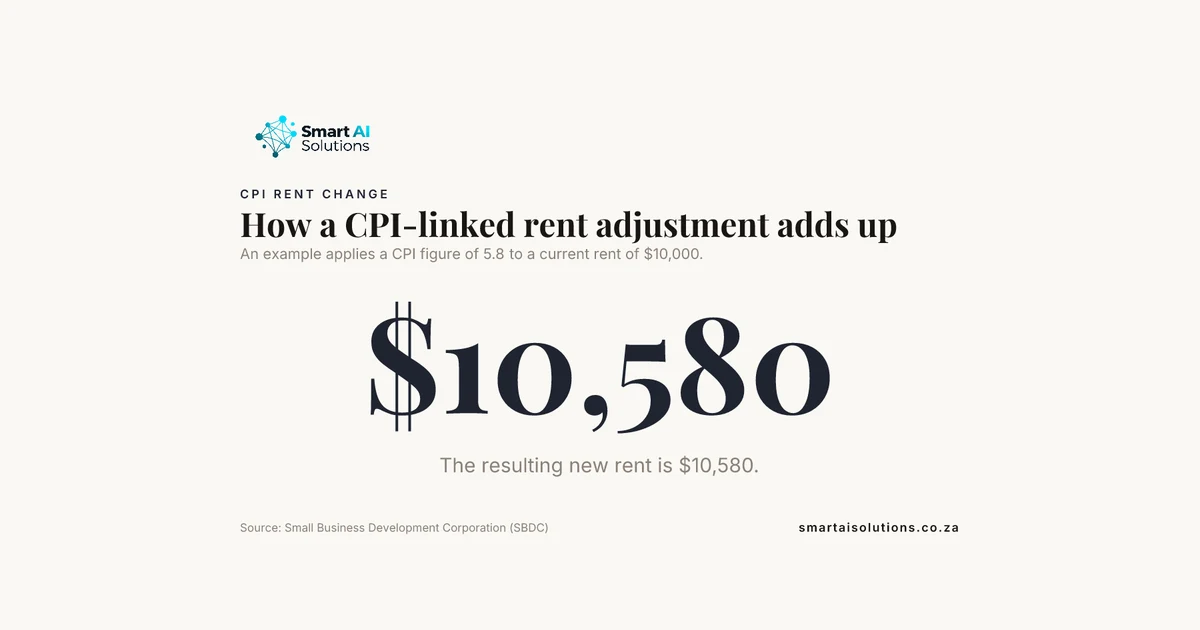
Test rent escalation calculations against the lease’s stated method and effective date. CPI-linked, fixed-percentage and linked-index adjustments all depend on correctly captured source terms and trigger dates, so a calculated amount should be traceable to both.
Ask the vendor to demonstrate the escalation methods in your portfolio and how an approved calculation reaches invoicing. Test the date, index source, rounding and approval record against a worked example agreed with your finance team.
Map lease data into the finance and invoicing process before adopting automation. Assess how the team will handle CAM reconciliation and compliance tasks, including the controls and approvals used to review those workflows.
Choose reports that answer operational questions: Which leases have upcoming escalations? Which expiries or option windows need attention? What does the portfolio’s exposure look like? A dashboard can surface exceptions, but someone still needs to investigate them and decide what action to take.
For real value, test an end-to-end case: source term, trigger date, calculation, approval, invoice and report. A correct dashboard cannot compensate for a wrong underlying term or an incomplete finance handoff.
Calculate the full cost and local fit
Compare spreadsheet administration with the full cost of adopting a system, not only its initial price. Include migration, configuration, integrations, staff review, training and ongoing data maintenance in the assessment.
Lease Management is a targeted AI solution listed for Commercial Property Developers. It fits a team considering lease workflows as part of a wider enterprise approach; see the enterprise AI solutions page for its place in that offering.
Check whether a system supports your actual legal and accounting workflows, document practices and reporting requirements. Have your finance team confirm the accounting treatment and evidence it needs; a lease administration tool does not determine that treatment.
For South African operations, include data access controls, permissions, retention and POPIA-related responsibilities in the design and governance review. The team should understand who can access lease documents and records, how access is managed and how information is retained.
Measure likely benefits against your own current process rather than treating them as guaranteed savings. Track whether the change reduces missed actions or rekeying and improves reporting reliability, then compare those results with implementation and maintenance effort.
Plan a controlled move from spreadsheets
Start by cleaning and reconciling the spreadsheet before migration. Find duplicate records, stale leases, inconsistent date formats and missing fields so old errors do not enter the new system as if they were verified.
Next, map each spreadsheet column to a destination field and agree on a source of truth for every value. Validate a sample against signed leases and amendments before moving the full portfolio.
Mark unverified leases clearly, assign an owner and set a review deadline. Keep a record of corrections and the documents that support them, rather than presenting uncertain values as final.
Run a pilot that includes representative lease types and document conditions. Test reminders, integrations, reports and exception handling before expanding use, and allow spreadsheets and the new system to coexist temporarily only when update rules and responsibilities are explicit.
- Prepare: remove duplicates and reconcile the current record.
- Map: assign each field a destination and a source of truth.
- Validate: compare a sample with signed agreements and amendments.
- Pilot: exercise key workflows and resolve exceptions.
- Expand: move the wider portfolio with clear ownership and review status.
Frequently Asked Questions
Can AI process a handwritten lease or a poor-quality scan reliably?
Recognition can be unreliable when handwriting is difficult to read or a scan obscures words, dates or clause boundaries. For those documents, use a clear digital copy where possible and treat uncertain fields as requiring direct transcription or review.
Can AI identify rent-free periods and unusual clauses as well as standard dates?
AI can be configured to look for rent-free periods and clause types beyond standard dates, but unusual wording is more likely to need human interpretation. Keep the original clause available so a reviewer can understand the context before a term drives billing or an action.
How often should commercial lease records be reviewed after migration?
Review upcoming actions on a regular monthly cycle and schedule a broader record review at least annually. Revisit an individual lease whenever a signed amendment, renewal decision or other material change affects its terms.
Can a lease system handle records in more than one currency?
A system can support multi-currency records when it is configured for the currencies, accounting mappings and reporting rules the team needs. Keep the contractual currency distinct from any converted reporting value so the original obligation remains clear.
Does AI lease management replace a commercial lease administrator?
No, AI lease management can organize information and automate repeatable steps, while people remain responsible for decisions, exceptions and coordination with finance and legal teams. The administrator’s work shifts toward review, control and follow-through rather than disappearing.
Can lease reminders go to more than one person?
Reminder workflows can be configured to notify an action owner and additional colleagues who need visibility. Define who receives each alert and who handles it if the primary owner is unavailable, so notifications lead to an accountable response.
Conclusion
Is AI lease management better than tracking commercial leases in spreadsheets? It is often the better fit when lease complexity, amendments, handoffs or deadline risk demand shared records, controlled review and connected workflows; spreadsheets remain practical for a small, stable portfolio with disciplined ownership.
Before switching, test AI abstraction against source documents, assess finance and reporting fit, calculate full transition costs and migrate through a controlled pilot. The best choice is the one that keeps critical lease data accurate, traceable and connected to the actions your team must take.
Put the next step into practice
For the related implementation detail, read Best AI Lease Management System for a South African Commercial Property Portfolio: What to Evaluate. Bring one workflow, the systems it touches and a few representative examples to a discovery conversation.