The short answerAsk a Durban development partner to prove fit with your routes, warehouse or production line. Begin with one operational bottleneck and test recommendations with staff.
The short answer
Ask a Durban development partner to prove fit with your routes, warehouse or production line. Begin with one operational bottleneck and test recommendations with staff.
Choose an AI development partner in Durban by testing its understanding of your logistics or manufacturing operation. Ask for relevant delivery evidence, map the systems and constraints involved, and begin with one measurable pilot. A sector label on a website is a starting point for questions, not proof of a working solution.
Key Takeaways
| Question | Short answer |
|---|---|
| How should we shortlist providers? | Ask each one for evidence of a comparable operational workflow and a clear explanation of its delivery role. |
| What does local delivery mean? | Confirm on-site availability, remote support, shift coverage and who attends a production incident. |
| How should a business begin? | Start with an operational bottleneck, then test a focused proof of concept before expanding. The AI project roadmap describes discovery, piloting, integration and ongoing optimisation. |
| What should a provider prove? | Ask for evidence of the business problem, data used, integrations, production deployment and customer references. |
| What is the main implementation risk? | Disconnected systems and inconsistent operational records can undermine a model before its technical design becomes the limiting factor. |
Shortlist providers by sector evidence and local delivery
For local coverage, distinguish a Durban office from the ability to work on-site. Ask how the developer service would fit your operations and team.
| What to compare | What to look for | Why it matters |
|---|---|---|
| Sector relevance | Examples tied to logistics, warehousing, transport or factory processes | Industry language alone does not show that a provider understands operational constraints. |
| Delivery location | Clear options for on-site workshops, remote development and go-live support | Operations teams may need hands-on workflow mapping and training. |
| Technical fit | Experience integrating with the systems and equipment already in use | A useful AI model must fit the real flow of orders, inventory, production or fleet data. |
Do not treat company size, directory placement or a broad AI claim as evidence of sector delivery. Ask for a case study that explains the initial bottleneck, the data involved, the integration work, whether the solution reached production and how the customer can discuss the outcome.
Logistics AI use cases in Durban
For a logistics business, the strongest AI opportunities often sit in route planning, demand forecasting, shipment visibility and routine document workflows. A Durban AI development partner should be able to explain how route optimisation accounts for factors such as delivery windows, vehicle capacity and traffic, rather than simply promising a faster route.

Illustrative image; not a customer case study.
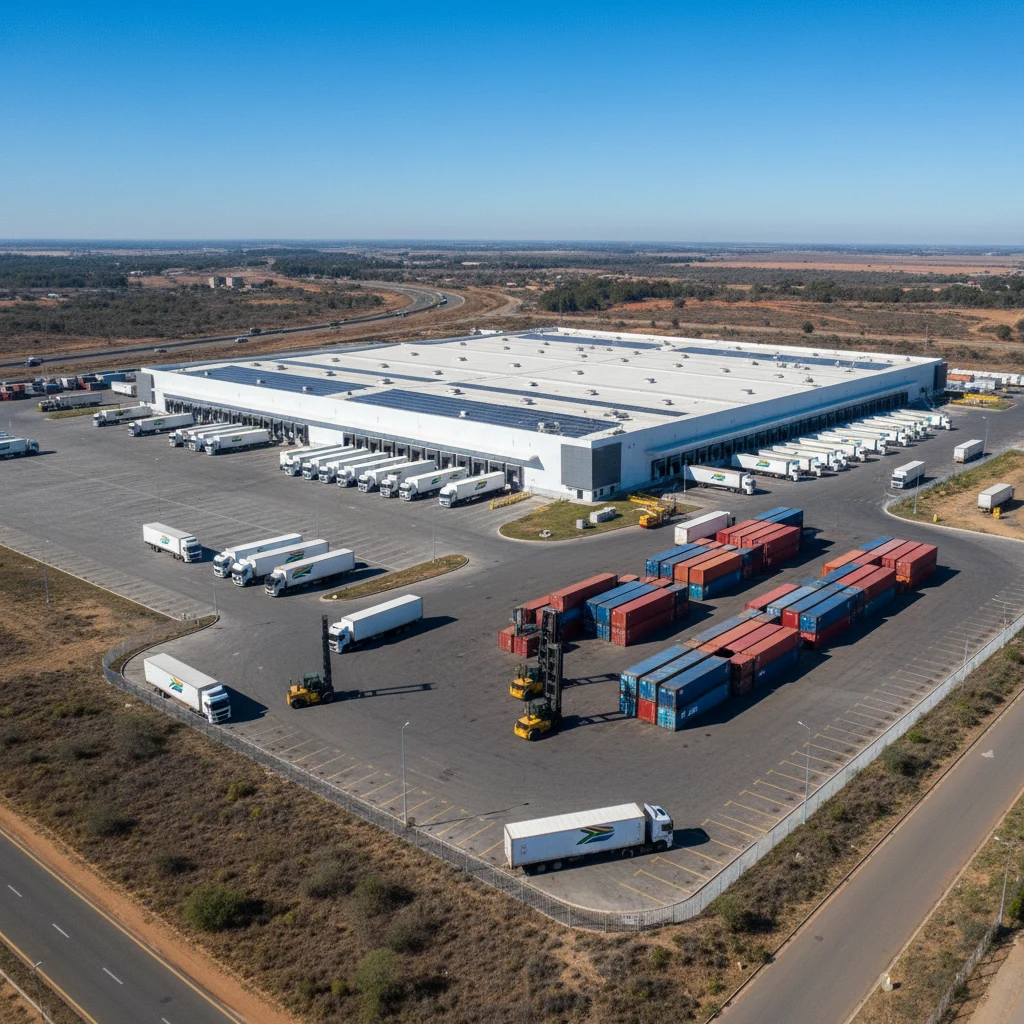
Illustrative image; not a customer case study.
Logistics firms that can benefit include port operators, shipping companies, freight and transport providers, couriers and warehouse operators. The right first use case depends on where a business loses time or visibility, such as late deliveries, recurring stock discrepancies, uncertain arrival times or repetitive document checks.
AI in logistics does not have to mean replacing dispatchers or planners. A useful system can make recommendations, explain the factors behind them and flag exceptions for a person to resolve.
Manufacturing AI for quality, planning and maintenance
Manufacturing AI can support computer vision for quality checks, predictive analytics for equipment condition and smarter production scheduling. The best fit depends on the production constraint: recurring defects call for a different solution from unexpected downtime, changeover delays or unreliable material availability.
For a quality-control project, ask how the model handles different product versions, defect categories and changes in lighting or camera position. For predictive maintenance, confirm that the team understands the equipment signals available and how maintenance staff will use alerts in their existing workflow.
A manufacturing AI developer in Durban should also account for operational realities such as shift patterns, machine capacity, maintenance windows and load-shedding schedules. A model that ignores those constraints may produce technically sound recommendations that planners cannot use.
Scope a low-risk proof of concept around one bottleneck
Start with a measurable business problem, not a preferred technology. A logistics pilot might focus on route recommendations for one defined delivery area, while a factory pilot could examine one recurring defect type or one machine with frequent interruptions.
Before development begins, agree on the baseline and the success measures. Depending on the use case, those could include missed delivery windows, route-planning effort, stock discrepancies, inspection consistency, unplanned stoppages or schedule changes.
Keep the initial scope narrow enough to test safely. A sound proof of concept should define which data it uses, who reviews its recommendations, how staff report errors and what happens if the model or integration is unavailable.
- Pick one workflow: choose a process with a clear owner and a recurring operational pain point.
- Agree on a baseline: record how the process performs before the AI changes it.
- Start with recommendations: let experienced staff review outputs before giving a system authority to trigger actions.
- Set a decision point: decide what evidence would justify refining, expanding or stopping the pilot.
This gives a Durban AI development company a concrete brief and lets your team judge operational fit before committing to a wider rollout.
Connect AI to ERP, warehouse, transport and factory systems
AI works best when it fits the systems that already run the operation. Logistics projects may draw from a transport management system (TMS), warehouse management system (WMS), ERP, GPS trackers or telematics; manufacturing work may need data from ERP, a manufacturing execution system (MES), PLCs, SCADA or inspection equipment.
Ask the provider to map how information will move through the existing workflow. The plan should identify source systems, data owners, update frequency, exception handling and how staff will see or act on an AI recommendation.
Integration does not always require replacing a working system. A provider can assess whether an API, scheduled file transfer, database connection or intermediary service best suits the systems involved, then test the end-to-end flow before live use.
Prepare sample records and involve the people who know the workflow in practice. They can explain missing fields, inconsistent naming, manual workarounds and exceptions that may never appear in a tidy system diagram.
Compare custom AI development with ready-made software
Choose a ready-made logistics or factory platform when its standard workflows match your needs and you want to configure a proven set of features. Consider custom AI development when the problem depends on distinctive operating rules, local constraints, unusual equipment or information spread across systems that do not work together.
A provider may also combine approaches: use existing business software as the system of record, then build an AI layer for forecasting, prioritisation or recommendations. Ask what the proposed model will add beyond the features your current ERP, WMS, TMS or manufacturing platform already provides.
Compare providers on more than their technology stack. We recommend asking each one to explain:
- Which operational problem the proposed AI addresses, and how the team will measure improvement.
- What data and integrations the work requires, including any data cleanup or equipment changes.
- How the team will test the model with real users and handle poor or uncertain recommendations.
- Who will train staff, monitor performance and maintain the system after deployment.
- Who owns the code, models and project documentation, and how those assets can be transferred.
Plan for security, data quality and ongoing support
Before sharing operational records, map what data the project needs and who should be allowed to access it. Use role-based permissions, encryption, audit logs, clear retention rules and written agreements that cover confidentiality, data handling and incident response.
For an AI project in South Africa, ask how the provider will handle personal information under POPIA, especially when records include driver details, customer contacts or employee information. Make sure the project team can explain where data is processed, how access is controlled and whether information will be used to train any broader model.
Data readiness matters just as much as security. Inconsistent timestamps, duplicate product codes, incomplete delivery records and disconnected systems can distort forecasts or weaken a model, so include operations staff who can explain how the records are created and where they need correction.
After launch, agree who monitors errors, model drift, integration failures and changing operating conditions. Set a review process for updates, staff feedback and escalation so a live AI system remains useful as routes, products, machines or business rules change.
Frequently Asked Questions
Can AI work with older manufacturing equipment?
Sometimes. First assess available signals, supported interfaces and safe installation requirements with the equipment owner. Additional sensors may be an option, but their suitability and cost depend on the machine and operating environment.
Can a smaller business start with one vehicle route or production line?
Yes, provided the pilot has a clearly defined task and enough relevant data to evaluate it.
What should operators do when an AI recommendation seems wrong?
Give staff a clear way to reject or override a recommendation and record why they did so. That feedback helps the project team distinguish a model error from a change in operating conditions or an incomplete business rule.
Who owns the code and models when we rent an AI developer?
Agree on ownership of the code and models. Put access to documentation and handover arrangements into the project agreement so the team can maintain the work over time.
What ongoing costs should we plan for after deployment?
Budget for more than model development: consider hosting or compute, system integrations, monitoring, updates, data preparation and staff training. The mix depends on the solution, so ask the provider to separate recurring costs from one-off build work.
Conclusion
Before choosing an AI development partner, test its claims against your actual workflow. Ask for relevant project evidence, define one measurable pilot, plan the system integrations and data controls, and agree on support after go-live.
Put the next step into practice
For the related implementation detail, read AI for Logistics and Route Optimization in South Africa. Bring one workflow, the systems it touches and a few representative examples to a discovery conversation.