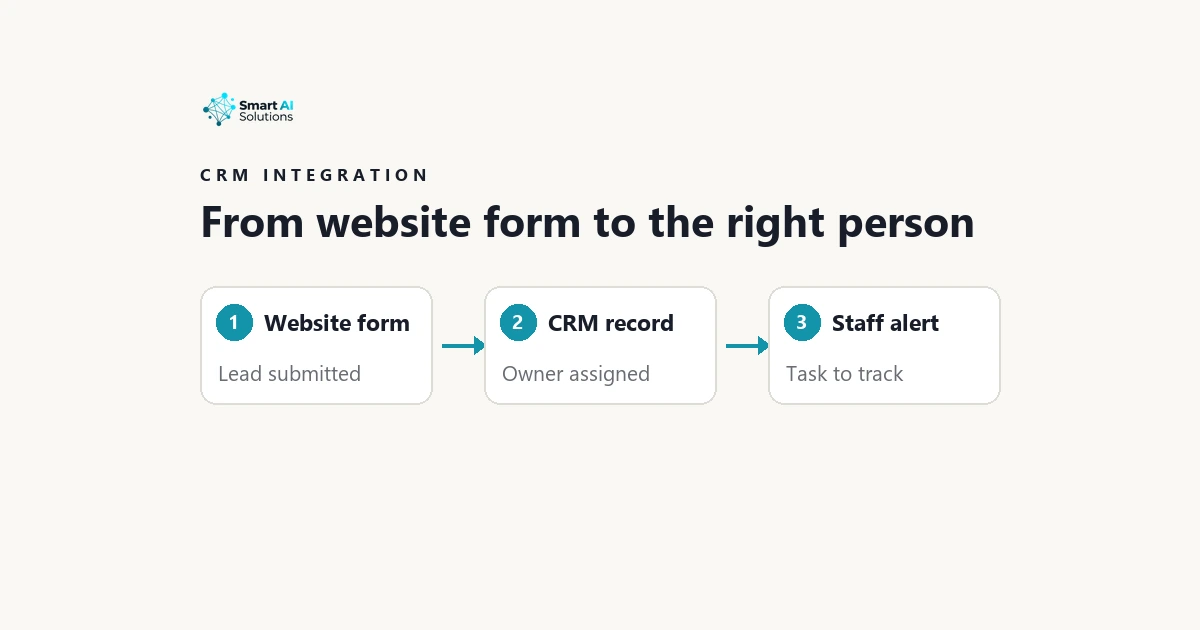
The short answerA proper AI audit investigates six operational layers of your business -- not just your software.
The short answer
A proper AI audit investigates six operational layers of your business -- not just your software.
What Does a Real AI Audit Actually Look At?
Direct answer: A proper AI audit investigates six operational layers of your business -- not just your software. According to Deloitte's 2025 State of AI in the Enterprise report, 74% of organisations that achieved scaled AI success started with a comprehensive operational assessment covering processes, systems, and people. For South African manufacturers especially, this means examining everything from shopfloor SOPs to back-office ERP configurations.
Current as of 31 May 2026: This article has been reviewed for the 2026 South African AI, SEO, and automation market. Pricing, platform capabilities, Google rich-result rules, and AI model features change quickly, so verify live vendor documentation before procurement. For privacy and data handling, use the Protection of Personal Information Act as the baseline; for search and structured-data implementation, use Google Search Central.
This isn't a checklist exercise. It's a methodical investigation into how your business actually runs, where data flows, where it gets stuck, and where intelligent systems could make a measurable difference.
If you've read our guide on how to audit your own business for AI opportunities, this post goes deeper into each area a professional audit covers.
TL;DR: A business AI audit examines six layers: SOPs, ERP, CRM, POS, personnel workflows, and industry-specific processes. Each layer is assessed for data quality, process repetition, system integration potential, and team readiness. For manufacturing businesses in South Africa, the audit typically surfaces 8-15 specific AI opportunities across production, procurement, and quality control.
How Are SOPs Investigated During an AI Audit?
Standard operating procedures are the backbone of any audit because they reveal how work actually gets done. A 2024 process mining study by Celonis found that 67% of business processes deviate significantly from their documented SOPs, meaning the real workflow often looks nothing like what's written down.
The SOP investigation has three phases:
Phase 1: Process Mapping
We map each SOP as it actually happens -- not how the manual says it should happen. This means shadowing staff, reviewing system logs, and documenting every step including workarounds.
What we look for:
- Steps that involve copying data between systems
- Decision points that follow consistent rules ("if X, then Y")
- Bottlenecks where work queues up waiting for one person
- Steps that could be eliminated entirely
Phase 2: Data Flow Analysis
For each SOP, we trace where data originates, how it moves, and where it ends up. In South African manufacturing, we frequently find that production data lives in three or four disconnected systems -- a shopfloor terminal, an Excel tracker, the ERP, and someone's email.
Phase 3: Opportunity Scoring
Each process gets scored on four dimensions: automation potential (can AI handle this?), data availability (is there enough clean data?), business impact (what's the Rand value?), and implementation complexity (how hard is it to change?).
Implementation note: In our experience with South African manufacturers, the SOP investigation alone typically identifies 5-8 processes where AI could save 10-30 hours per week. The most common? Purchase order processing, quality inspection documentation, and production scheduling.
What Does the ERP Assessment Cover?
ERP systems are where operational truth lives -- or should live. According to Panorama Consulting's 2025 ERP Report, 53% of ERP implementations exceed budget and timeline, often because organisations don't fully understand their own system's capabilities before adding new technology on top. In South Africa, Sage, SAP Business One and Syspro are all widely deployed in the mid-market.
The ERP assessment examines:
Data Quality and Completeness
Before any AI can work with your ERP data, that data needs to be accurate. We check:
- Master data accuracy (customer, supplier, product records)
- Transaction data completeness (are all operations captured?)
- Historical depth (how many months/years of reliable data?)
- Data consistency across modules
A common finding: businesses have 18 months of excellent sales data but only 3 months of accurate inventory data because they changed warehousing processes mid-year.
Integration Capability
Modern AI tools need to connect to your ERP. We assess:
- Available APIs (REST, SOAP, ODBC)
- Export capabilities (scheduled reports, CSV dumps)
- Third-party connector availability
- Real-time vs. batch data access
Sage Evolution, for example, has robust ODBC connectivity that many South African businesses don't realise they can use for AI integrations.
Underused Features
Many ERPs already include basic analytics, forecasting, or workflow features that businesses haven't activated. The audit identifies these before recommending external AI tools.
Manufacturing-Specific ERP Checks
For manufacturers, we dig deeper into:
- Bill of materials accuracy and versioning
- Production order tracking completeness
- Quality management data capture
- Maintenance logging (for predictive maintenance opportunities)
- Costing accuracy (standard vs. actual)
How Is the CRM Evaluated for AI Readiness?
CRM systems hold your customer relationship data, but most businesses treat them as expensive address books. Salesforce's 2025 State of Sales report found that sales reps spend only 28% of their time actually selling -- the rest goes to admin, data entry, and searching for information. That gap is exactly what AI can address, but only if the CRM data supports it.
The CRM evaluation covers:
Data Hygiene
- Duplicate contact rates (above 10% is a red flag)
- Missing fields on contact and deal records
- Consistency of data entry (free-text vs. structured fields)
- Last-updated timestamps (stale data = unreliable AI)
Pipeline and Sales Process
- Are sales stages defined and consistently applied?
- Is deal value tracked accurately?
- Do you have win/loss reasons recorded?
- Is activity data captured (calls, emails, meetings)?
Why this matters for AI: Lead scoring models need at least 12 months of consistent deal data with clear win/loss outcomes. If your pipeline stages are used inconsistently, the model can't learn which patterns predict success.
Communication Data
- Email integration (are customer emails captured?)
- Call logging (are conversations summarised?)
- WhatsApp and messaging records (critical in South Africa where WhatsApp Business is a primary channel)
CRM AI Opportunity Map
| Opportunity | Data Required | Typical ROI Timeline |
|---|---|---|
| Lead scoring | 12+ months deal data, 200+ closed deals | 3-6 months |
| Follow-up sequences | Email/activity history | 1-3 months |
| Churn prediction | 24+ months customer data | 6-12 months |
| Sentiment analysis | Email/chat transcripts | 2-4 months |
What POS Data Gets Assessed?
For retail and hospitality businesses, POS data is often the richest operational dataset available. According to the National Retail Federation's 2025 retail technology report, retailers using AI-driven analytics on POS data see an average 3-5% improvement in gross margins through better pricing and inventory decisions.
The POS assessment looks at:
Transaction Data Depth
- Individual line-item data (not just daily totals)
- Payment method breakdowns
- Time-of-day and day-of-week patterns
- Returns and exchanges tracking
Customer Identification
- Loyalty programme participation rates
- Customer purchase frequency tracking
- Basket analysis capability (what's bought together?)
- POPIA-compliant customer data collection
System Integration
- POS-to-inventory management connection
- POS-to-accounting system link
- Real-time vs. end-of-day data sync
- API availability for external tools
South African context: Many SA retailers run Lightspeed, Vend, or legacy systems with limited API access. The audit identifies what's possible with your current POS before recommending upgrades.
Smart AI Solutions insight: We've found that POS data is the fastest path to AI ROI for South African retailers -- not because the AI is complex, but because POS data is typically the cleanest and most complete dataset in the business. Demand forecasting models trained on 12 months of POS data regularly outperform manual ordering within 6-8 weeks.
How Are Personnel Workflows Evaluated?
People processes are where AI adoption succeeds or fails. The World Economic Forum's 2025 Future of Jobs Report found that 44% of workers' core skills will change by 2030, and organisations that invest in workforce readiness alongside technology see 2x higher returns on their AI investments.
The personnel workflow assessment covers:
Time Allocation Analysis
How do your people actually spend their working hours?
- Administrative tasks (email, reporting, filing)
- Data gathering and compilation
- Decision-making and analysis
- Customer-facing activities
- Creative and strategic work
The goal: Identify where people spend time on tasks that AI could handle, freeing them for higher-value work.
Knowledge Management
- Where does institutional knowledge live? (Individual heads, documents, systems?)
- What happens when a key person is absent?
- How are new staff onboarded?
- What tribal knowledge has never been documented?
Communication Patterns
- Internal meeting load (hours per week)
- Email volume and response patterns
- Cross-department information requests
- Reporting frequency and effort
Digital Readiness
- Current tool proficiency across the team
- Attitude toward new technology
- Previous experience with automation
- Training capacity and appetite
Smart AI Solutions field note: Across our assessments of South African businesses, personnel workflow analysis consistently reveals that mid-level managers spend 35-45% of their week on information gathering and reporting. AI-assisted summarisation, report generation, and data compilation can recover 8-15 hours per manager per week.
What Manufacturing-Specific Items Does the Audit Cover?
Manufacturing audits go beyond the five standard areas. According to PwC's 2025 Digital Factory report, manufacturing companies implementing AI see an average 10-20% reduction in unplanned downtime and 5-15% improvement in overall equipment effectiveness (OEE).
Additional manufacturing audit areas:
Production Scheduling
- Current scheduling method (manual, spreadsheet, MRP?)
- Schedule adherence rates
- Setup time and changeover frequency
- Constraint identification (bottleneck machines, skills)
Quality Control
- Inspection data capture (paper, digital, automated?)
- Defect categorisation and tracking
- Root cause analysis processes
- Scrap and rework rates
AI opportunity: Visual inspection AI can handle quality checks on production lines at speeds and consistency levels humans can't match. But it requires consistent lighting, camera positioning, and defect categorisation data.
Maintenance
- Maintenance logging completeness
- Equipment sensor data availability
- Breakdown history and patterns
- Current maintenance strategy (reactive, preventive, or predictive?)
Supply Chain
- Supplier lead time tracking accuracy
- Demand variability by product/SKU
- Safety stock calculation methods
- Procurement approval workflows
What Happens After the Audit?
The audit produces three deliverables:
1. Opportunity Map: A visual summary of all identified AI opportunities, scored by impact, feasibility, and implementation effort. This typically shows 8-15 specific opportunities for a mid-size South African business.
2. Prioritised Roadmap: The top 3-5 opportunities sequenced into a 12-month plan, with estimated costs in Rand, expected time savings, and risk factors.
3. Readiness Report: An honest assessment of what needs to happen before AI implementation can begin -- data cleanup, system upgrades, team training, or process documentation.
The roadmap isn't a sales pitch. In our experience, at least 2-3 of the identified opportunities can be addressed with existing tools or simple process changes, no AI required. The audit should tell you where NOT to use AI, too.
Ready to Investigate What's Possible?
A thorough AI audit is the foundation of every successful AI initiative. It replaces guesswork with evidence and ensures your investment goes where it'll have the most impact.
Whether you're running a manufacturing operation in Gauteng, a retail chain in the Western Cape, or a services firm in KwaZulu-Natal, the same principles apply: investigate first, then act.
If you'd like to discuss what an audit would look like for your specific business, get in touch with our team. We'll assess your current systems together and map the opportunities that matter most.
Related Reading:
- How to Audit Your Business for AI Opportunities
- Connecting AI to Your ERP: SAP, Sage and Beyond
- Integration Checklist: Preparing Your Systems for AI
Our team at Smart AI Solutions, led by Loxly Atkinson, has implemented these solutions across multiple South African industries.
Frequently Asked Questions
How are SOPs investigated during an AI audit?
SOPs are mapped as they actually happen through staff shadowing and system log review. Each process is scored on automation potential, data availability, Rand impact, and implementation complexity. The SOP phase typically identifies 5-8 AI-ready processes.
What does the ERP assessment cover?
The ERP assessment examines data quality and completeness, integration capability (APIs, connectors), underused built-in features, and industry-specific checks like bill of materials accuracy for manufacturers. Sage, SAP Business One, and Syspro are the most common systems we assess in South Africa.
How is the CRM evaluated for AI readiness?
The CRM evaluation checks data hygiene (duplicate rates, missing fields), pipeline consistency, communication data capture, and maps specific AI opportunities like lead scoring and churn prediction. Each opportunity is matched to the data requirements and typical ROI timeline.
What happens after the audit is complete?
The audit produces three deliverables: an opportunity map showing all AI possibilities scored by impact and feasibility, a prioritised 12-month roadmap with Rand cost estimates, and a readiness report detailing prerequisites like data cleanup or team training.
Related reading:
- ERP and CRM Hidden AI Opportunities. A deeper look at the AI value most businesses leave untapped inside their existing ERP and CRM data