The short answerIf you are searching for AI search visibility services to help my business appear in ChatGPT and Perplexity, buy a prompt baseline first, then content and technical fixes, then measurement on each platform.
The short answer
If you are searching for AI search visibility services to help my business appear in ChatGPT and Perplexity, buy a prompt baseline first, then content and technical fixes, then measurement on each platform.
If you are searching for "AI search visibility services to help my business appear in ChatGPT and Perplexity", buy in this order: a baseline of real buying prompts, then fixes to the content and technical access behind the answers, then measurement on each platform. Compare every service on the questions it answers, the work it carries out and how it measures progress, and treat any guaranteed placement as a warning sign.
This guide explains how to assess that work for your business, your audience and the way your customers buy.
Disclosure: Smart AI Solutions publishes this guide and sells AI search visibility services. Where we name our own services, it is to show what a scope and a price look like. Nothing here is a ranking, and the same checks apply to any provider you are considering.
Key takeaways
| What you want to know | What to look for |
|---|---|
| How do we get a business mentioned in AI answers? | Build pages around real customer questions, then check how ChatGPT, Perplexity and other platforms use them. |
| What should an AI visibility service include? | Look for an assessment, prioritised actions, clear ownership of implementation and reporting that compares platforms. |
| How do we establish a baseline? | Track a consistent set of buying prompts and record mentions, citations and competitors separately. |
| What is the best starting point? | A focused audit or citation report can reveal gaps before you commit to continuing work. |
| How do we improve visibility over time? | Fix the main content and technical gaps, rerun prompts, then review business signals. |
| Where can we compare service options? | Browse the AI services marketplace for audits, reports and managed services. |
What AI search visibility means for your business
AI search visibility is how often a business appears in answers from tools such as ChatGPT and Perplexity when people ask relevant questions. The aim is to be included accurately for the right customer, service and location, not simply to see a business name appear more often.
A brand mention names your business. A citation points to a source used to support an answer. Both can help people discover you, but neither alone proves that the appearance brought qualified visits, enquiries or sales.
ChatGPT, Perplexity and other answer platforms can retrieve and present information differently. A business that appears for one prompt on one platform is not automatically visible for another prompt or platform. Our guides on how to appear in ChatGPT answers and how Perplexity chooses its sources cover each platform in more detail.
Conventional website optimisation can help make pages accessible, useful and authoritative, but it does not guarantee AI mentions. Generative engine optimisation (GEO) and answer engine optimisation (AEO) focus on making information clear enough to use in generated answers. If the two terms are new to you, GEO vs SEO sets out the difference.
When assessing providers, look for measured work on relevant visibility, not a promise of placement. Our AI search visibility service overview describes work across content, technical access, authority and monitoring.
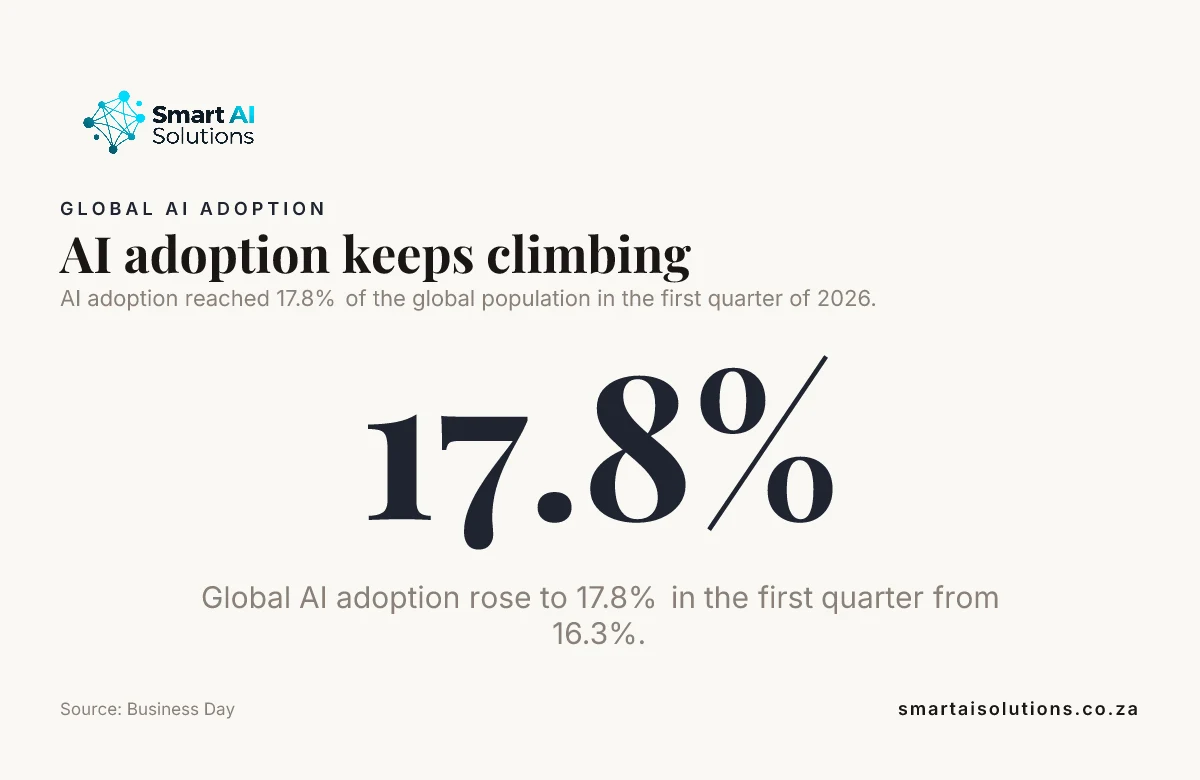
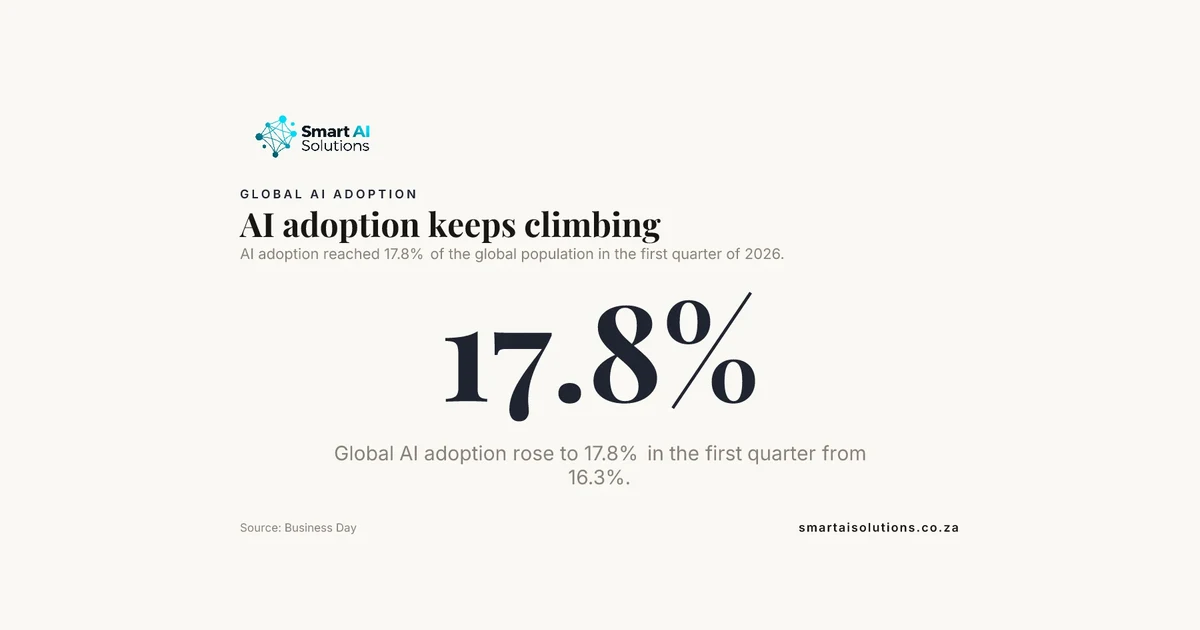
Global AI adoption rose to 17.8% of the global population in the first quarter of 2026, from 16.3%. Source: Business Day
Start with the right prompts and a clear baseline
To assess current visibility, test the questions customers ask before choosing a provider, not only prompts that contain your company name. Include comparisons, specific service needs and location-based questions so the results reflect how people really buy.
For South African businesses, shape prompts around customer types, service areas and familiar local terminology. A Cape Town customer looking for a nearby service may use different wording from a national buyer comparing providers.
Use the same prompt set across ChatGPT, Perplexity and other relevant platforms, then record four things separately:
- brand mentions
- citations and the pages they point to
- competitor appearances
- the wording or context of the answer
This gives you a useful baseline for prompt tracking and competitor benchmarking.
Start with high-value gaps where your business has a relevant offer and credible information to contribute. A broad list of possible prompts is less useful than a short, prioritised set tied to actual customer needs.
For a combined visibility scan, technical crawl and on-page review, the Deep Audit brings findings together in a branded report with a prioritised fix list, schema recommendations and a 30-minute walkthrough call. From R1,500 once-off, it suits a business that wants a practical starting assessment and does not yet need recurring monitoring. A free GEO score is available if you want a first reading before paying for anything.
For a prompt-led comparison, the Snapshot checks 5 to 15 buying prompts across ChatGPT, Perplexity and Gemini. It includes share of voice, a competitor map, a gap list, fix recommendations and a branded PDF report, which makes it useful when you want to see which businesses and sources appear for specific questions.
Did you know? AI subscription payment volume rose by 125 per cent in 2025. Source: Bureau for Economic Research
Compare services that make business content easier to cite
Useful business content answers a buyer's question directly, explains the service plainly and supports its claims with relevant expertise. Promotional language and repeated keywords cannot replace practical details about who a service is for, where it is available and what it does.
Look for descriptive headings, concise answer blocks and explicit definitions of your business, services and important entities. These details help an answer system interpret the page, while a clear page structure helps customers find the information they need.
Keep important facts consistent across related pages, and make each page useful on its own. An answer platform may draw from an individual service page, so that page should explain its offer without making the reader piece together details from several places.
Content citability improvements can make key pages easier to understand and cite.
GEO Growth combines AI-extractable content formatting with schema and entity updates, AI citation tracking across 5+ platforms and a monthly AI visibility dashboard. At R1,499 per month when bundled with Local SEO, or R2,499 per month standalone with no setup fee, it offers a wider scope for businesses that want content improvements alongside continuing measurement.
When comparing a focused content service with a broader GEO option, ask whether the scope includes page restructuring, content formatting and supporting improvements. The clearest proposals explain which pages will change and how the work supports customer questions.
Check technical access and wider authority signals
Important pages need to be accessible and understandable. A provider may review crawlability, robots.txt configuration and llms.txt maintenance, but these are technical tasks. They do not guarantee that a page will appear in an AI answer.
Accurate structured data, including Organization, Service and FAQPage schema markup, can clarify what a page describes. Schema supports interpretation; it cannot, by itself, secure a mention or citation. Our guide to schema markup for AI visibility lists the types worth adding first.
AI Crawler Optimization configures robots.txt to allow AI crawlers and creates and maintains llms.txt. This work is relevant when a business needs to address technical access as part of a broader visibility plan.
Third-party authority also shapes how a business's identity is understood beyond its own website. Brand Authority Building supports that part of a visibility plan.
For local businesses, keep the business name, services and location details consistent across the website and relevant directories. Contradictory service areas or incomplete location information can make it harder to connect a business with a local customer's question.
Match the service scope to your business and audience
Choose platform-specific planning when your customers use several AI tools. AI Platform Strategy develops strategies for ChatGPT, Perplexity and Google AI Overviews, because each platform may surface different answers and sources.
Compare AI visibility services by their actual scope, not by a long list of activities. A useful proposal explains how the provider will discover your priority prompts, what it will deliver, who implements changes, how often it reports and how it prioritises work.
| What to compare | What a clear scope should explain |
|---|---|
| Discovery | How the provider will identify your customer types, services, locations and relevant questions. |
| Deliverables | Whether you receive findings, revised content, technical updates, monitoring or a combination. |
| Implementation | Who makes changes and what your team needs to supply or approve. |
| Reporting and priorities | How often results are reviewed and how the provider selects the next useful action. |
If your team has limited time or in-house expertise, distinguish advice from implementation and continuing improvement. An audit gives you findings and recommendations; an ongoing service should make clear which actions it carries out and how it checks their effect.
Ask how a provider will tailor prompts and content to your audience, services and locations, and how it will communicate uncertainty. A credible service describes the work it can control and treats answer placement as variable. It doesn't promise guaranteed mentions or citations.
Did you know? In the first quarter of 2026, 15.4% of the population in the Global South used generative AI, up from 14.1% in the second half of 2025. Source: Business Day
Measure citations, competitors and business outcomes over time
Ongoing measurement should use a stable prompt set across multiple platforms and track changes in citations, brand mentions and share of voice alongside competitor appearances. Ongoing Monitoring & Reporting provides monthly visibility reporting.
Look beyond the number of mentions. Check whether the cited page is relevant, whether an answer describes your business accurately and whether the appearance reaches the audience you want to serve.
Monitor includes the Snapshot's report. It adds regular reruns, trend tracking as answers change and alerts for new competitor citations. It supports businesses that want to follow movement over time and not rely on a single prompt check.
To connect visibility to business results, use analytics and enquiry or sales records, with tagged links where possible. Look for qualified visits and conversions associated with AI visibility, but treat a connection between the two as a signal to investigate, not proof that a particular mention caused a sale.
Review findings on a regular cadence, choose fixes based on observed gaps and rerun prompts after changes. For businesses that want a broader view alongside citation comparisons, technical findings and competitor benchmarking, the Website Intelligence Report brings several parts of online performance into one report.
Frequently asked questions
How much website content does a small business need before starting AI search optimisation?
There is no fixed word count or number of pages required to begin. Start with accurate, complete information about the services you most want customers to find, then expand as you identify unanswered buyer questions.
What should I do if an AI answer gives outdated or incorrect information about my business?
Save the platform, prompt, answer and any cited page so you can identify where the incorrect detail came from. Correct the authoritative page on your site first, then use the platform's available feedback or correction route when the answer itself needs attention.
Should I track branded prompts as well as questions from people who have not chosen a provider yet?
Yes. Branded prompts can reveal whether an AI answer represents your business accurately, while unbranded questions can show whether people encounter your business during discovery.
How often should I update service and location information used in AI search answers?
Update it as soon as a service, opening arrangement or service area changes. Schedule a quarterly review to catch details that have drifted. Give each update an owner so that changes are reflected across the pages and profiles your business maintains.
Can AI visibility services help if our business does not publish a blog?
Yes. A business can improve the clarity of its core service, product and location pages without running a blog, because those pages often contain the information buyers need to make a decision.
How can I compare AI visibility results when a platform changes its answer system?
Keep dated records of prompts, platform and observed answers so that each result has context. When a platform changes, establish a fresh comparison point and do not treat every difference as the effect of your latest content work.
Conclusion
The best AI search visibility services help you understand where your business appears, improve the information that supports relevant answers and measure whether changes make a difference to customers. Choose a scope that fits your team, covers the platforms your audience uses and connects its reporting to useful business signals.
If you are evaluating AI search visibility services to help my business appear in ChatGPT and Perplexity, prioritise clear deliverables, platform-aware measurement and realistic expectations. Consistent, useful business information gives an AI visibility strategy a sound foundation, while ongoing checks help you respond as customer questions and answers change. To talk through a scope for your business, contact our team.